> San Antonio Local Insight: San Antonio's hard water from the Edwards Aquifer affects every plumbing system in your home. With 357 mg/L mineral content (21 grains per gallon), our water causes faster corrosion, heavier scale buildup, and more frequent repairs than most US cities. Understanding this local factor helps you make better decisions about maintenance, repair, and prevention.
Triage the Pit Before the Next Storm Cell
Before following any generic plumbing checklist, adjust it for our Edwards Aquifer water. At roughly 357 mg/L, or 21 grains per gallon, the calcium carbonate and magnesium in the water can turn a small maintenance issue into repeat wear on valves, seals, drains, heaters, and appliance connections. That means even a drainage or pump checklist should account for mineral crust, sediment, stuck check valves, and storm-driven testing before the next heavy rain.
In King William, older foundations, tight retrofit spaces, and mixed cast-iron or galvanized drainage can complicate a pump setup. During a Bexar County downpour, note whether roof runoff is reaching the foundation and whether the discharge actually clears the house. A $150–$350 diagnostic visit is cheaper than opening a finished wall after repeated flooding.
Hard water from the Edwards Aquifer—about 357 mg/L, or 21 gpg—does not create groundwater, but mineral sediment can contribute to a sticky check valve or restricted fittings. Seasonal thunderstorms test those weak points; Winter Storm Uri added a separate freeze history that can leave exterior discharge piping cracked.
A sump pump that quits during or just after a downpour demands prompt attention. First, stay out of standing water near outlets, cords, or the pump. Check the basement from a dry location, move valuables uphill if it is safe, and call an electrician or emergency water-removal service if water is approaching energized equipment. Do not reach into the pit until power is disconnected and the area is dry.
The failure may be as simple as a tripped GFCI, a stuck float, or debris at the intake. It may also mean the pump is undersized, the discharge is blocked, or groundwater is arriving faster than the system can remove it. The checks below help distinguish a safe reset from a problem that needs professional equipment.
Why heavy rain exposes sump-pump problems
A sump system can appear healthy through dry weather because it rarely runs. Sustained rain raises the local water table, saturates soil around the foundation, and sends much more drainage into the basin. A marginal motor, partially obstructed pipe, or poorly adjusted float may fail only when the pump must cycle repeatedly. That timing does not necessarily mean rain damaged the pump; often, rain revealed an existing weakness.
The pit also receives sediment washed through perimeter drains. Silt can reduce intake flow, small debris can wedge beneath a float, and an aging check valve may let discharged water fall back into the basin. Every gallon that returns must be pumped again. If roof runoff empties beside the foundation or grading slopes toward the house, the pump may be handling water that should have been directed away outdoors.
Put electrical and water safety first
Never step into basement water to unplug a pump or reset a breaker. Water can conceal damaged extension cords, submerged receptacles, and energized appliances. If the electrical panel is safely accessible from a dry route, turn off the affected circuit. If access requires crossing water, stop and call the utility, fire department, or a licensed electrician according to local emergency guidance.
A sump pump should normally use a grounded, dedicated receptacle protected as required by local code. Do not bypass a GFCI, remove a grounding pin, or run a permanent installation through a light-duty extension cord. If the outlet is scorched, warm, buzzing, wet, or repeatedly trips after one reset, leave it off. Sewage odor, oily water, or water backing up from a floor drain adds biological and gas hazards; avoid contact and call a qualified cleanup or plumbing service.
Use this quick-reference triage table
| What you observe | Likely issue | Safe next step |
|---|---|---|
| Pump is silent and pit is rising | Lost power, failed switch, or failed motor | Check power only from a dry location; arrange backup pumping |
| Motor hums but water does not fall | Jammed impeller or blocked discharge | Switch power off; call for service if obstruction is not externally visible |
| Pump runs, stops, then water rushes back | Failed or reversed check valve | Have the valve and discharge layout inspected |
| Pump cycles every few seconds | Float setting, small basin, or return flow | Reduce inflow outdoors and schedule diagnosis |
| Pump works but cannot keep up | Excess inflow, undersized pump, or restricted pipe | Begin safe water removal and call a basement-drainage professional |
| Breaker or GFCI trips again | Electrical fault or wet equipment | Do not reset repeatedly; call an electrician or pump technician |
Treat this as triage rather than a diagnosis. Two problems can occur together—for example, a restricted discharge can overload a worn motor. Record what the pump does, how quickly the water rises, and whether water exits at the outdoor termination. Those observations help a technician act faster without requiring you to disassemble submerged equipment.
Check the power supply without taking risks
From dry ground, see whether other devices on the circuit have power. Look at the breaker position and the GFCI indicator. A breaker can sit between on and off; if everything is dry and there is no sign of damage, move it fully off and then on once. Reset the GFCI once. If either device trips again, do not keep trying. Repeated resets can energize a fault and overheat wiring.
Confirm that the pump plug has not been knocked loose and that a piggyback float-switch plug, if present, is assembled correctly. Do not connect the pump to an outlet of unknown capacity. During an outage, a portable generator must remain outdoors, well away from doors, windows, and vents; carbon monoxide can enter even when a garage door is open. Use only properly rated outdoor cords and transfer equipment consistent with the generator manufacturer and electrical code.
Inspect the float and pit from a dry position
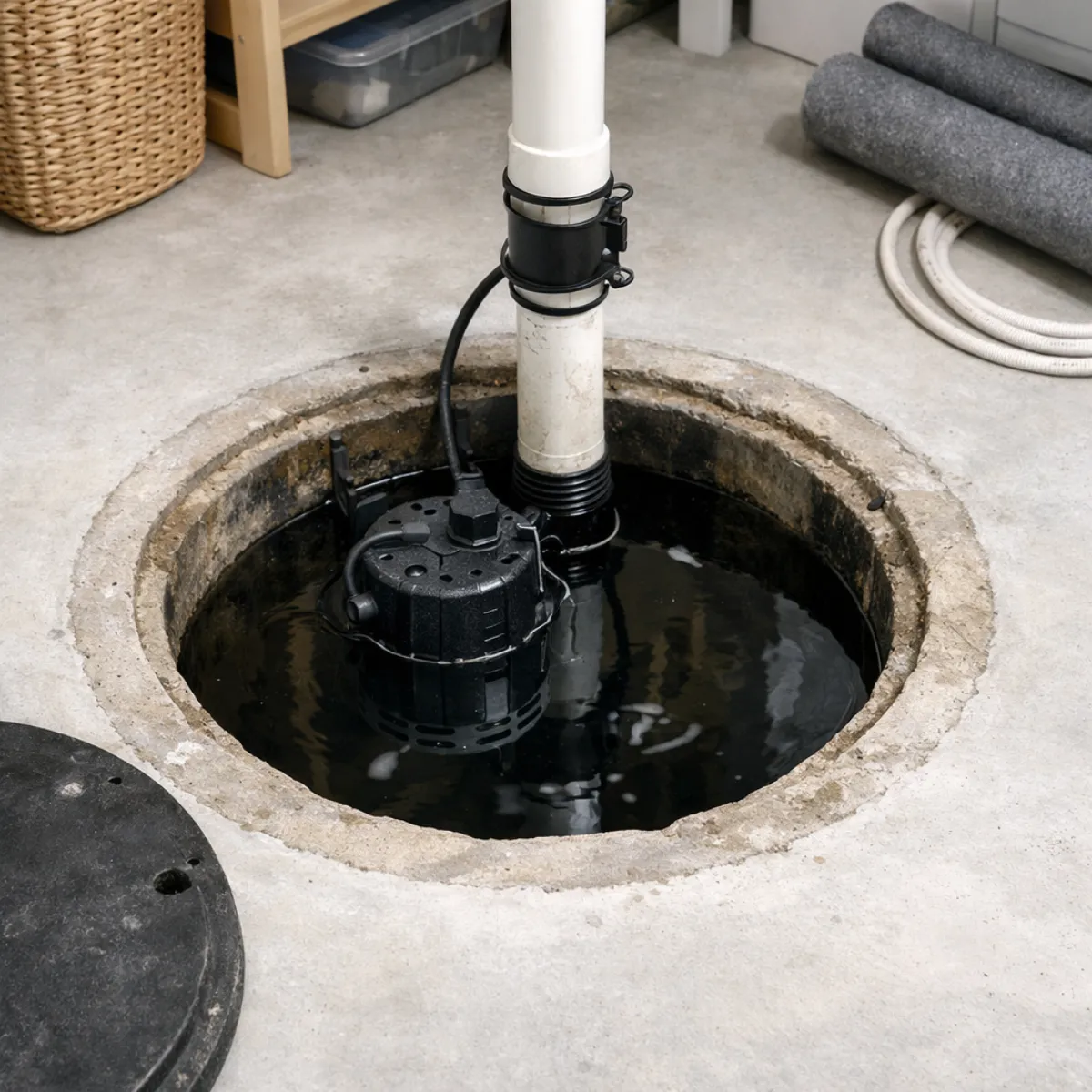
After disconnecting power, use a flashlight to inspect the basin. The float must move through its intended range without rubbing the wall, discharge pipe, power cord, or pit cover. A tethered float needs enough room to rise; a vertical float must slide freely. A shifted pump can pin the float down even though the motor itself is sound.
Remove only loose, reachable debris when the power is off and the pit can be approached safely. Do not put a hand beneath murky water or into an intake. Broken glass, sharp fasteners, insects, and contaminated water may be present. If the basin is overflowing, the cover is sealed for radon control, or the pump must be lifted to reach the obstruction, leave the work to a professional who can preserve the seal and sanitize equipment.
Examine the discharge route and check valve
Trace the visible discharge pipe for separated joints, crushing, leaks, or a closed service valve. Outside, locate the termination without standing in floodwater. It should release water away from the foundation and should not be buried by mulch, blocked by leaves, submerged in a ditch, or frozen. Never cap the line to stop a leak while the pump is operating; that can dead-head the pump and damage it.
Listen after each cycle. A brief thump may be normal, but a large volume rushing back suggests a check-valve problem. The valve must be installed in the correct direction and remain accessible. Drilling relief holes, replacing glued fittings, or changing pipe diameter without the pump instructions can create air lock or reduce capacity. When in doubt, have a plumber verify the layout rather than improvising during a storm.
Reduce incoming water while arranging help
The fastest safe relief may be outside. If conditions are not dangerous, verify that gutters are not overflowing and that downspout extensions discharge several feet away on ground that slopes away from the home. Do not climb a ladder during rain or lightning. Wait for safe weather to clear gutters. Move portable items away from basement walls, elevate storage, and place water alarms where they will remain dry enough to function.
For active flooding, a water-removal contractor can deploy pumps powered and protected for wet locations. A wet/dry vacuum is suitable only for small amounts of water when connected to a safe protected outlet and used according to its instructions. Never use a household vacuum. Avoid pumping water onto a neighbor’s property, a septic field, or a location where it immediately flows back toward the foundation.
Know when the pump is undersized or worn out
A pump that runs continuously while the level climbs may be moving some water but not enough. Capacity depends on vertical lift, pipe length, elbows, check-valve resistance, and discharge elevation—not merely the horsepower printed on a box. A higher-horsepower replacement is not automatically better; excessive velocity, short cycling, and incompatible piping can shorten system life.
Frequent cycling, grinding, overheating odor, visible corrosion, or inconsistent starts support replacement rather than repeated resets. Ask a contractor to estimate incoming flow and total dynamic head, inspect the basin size, and confirm that drainage pipes are open. If the home has recurring outages or finished space below grade, discuss a battery backup, a second pump set higher in the pit, high-water alarms, and a monitored alert. Each layer addresses a different failure mode.
Avoid common storm-time mistakes
Do not tape a float in the on position and leave the pump unattended. Running dry can overheat some pumps, while a blocked line can overheat nearly any motor. Do not bypass electrical protection, splice wet cords, open a motor housing, or use an indoor generator. Avoid removing a sealed pit lid without understanding whether it is part of a radon system.
Another mistake is treating indoor pumping as the whole solution. Short downspouts, clogged gutters, settled soil, window-well drainage, and cracks can overwhelm a perfectly serviceable pump. Do not excavate beside a wet foundation during a storm; saturated soil can collapse and buried utilities may be present. Document water paths with photos after immediate hazards are controlled, then address grading and drainage in dry conditions.
Escalate Immediately When Water or Electricity Is Unsafe
Call emergency water removal when water is rising faster than the pump can handle or is reaching a furnace, panel, outlets, or finished rooms. Call an electrician for repeated trips, wet receptacles, damaged cords, burning odor, or any uncertainty about energized water. Call a plumber or sump specialist when the motor hums without pumping, the discharge is blocked inside a wall, the check valve fails, or the pump must be removed.
After significant flooding, porous flooring, drywall, insulation, and stored materials may need controlled removal and drying. Hidden moisture can remain behind finishes even when the floor looks dry. Contact the insurer promptly, photograph damage without entering unsafe areas, and retain receipts. If water may contain sewage, fuel, or chemicals, professional remediation is more appropriate than ordinary household cleanup.
Plan improvements before the next storm
Test the pump during dry weather by following its manual, typically adding clean water until the float activates, and verify discharge outdoors. Clean the accessible basin, inspect the cord and check valve, and test alarms on a regular schedule. Replace alarm batteries and label the correct circuit. Keep the service company’s number, insurance contact, and a dry-route shutdown plan where household members can find them.
Review the complete water-management system. Extend downspouts, correct negative grading, maintain window wells, and repair drainage defects. A backup pump needs periodic testing too; a dead battery offers only false reassurance. Record installation dates and service history. Planning is cheaper and safer than choosing equipment while the pit is overflowing.
Frequently asked questions
Why is my sump pump running but the water level is not dropping?
The intake or discharge may be restricted, the impeller may be damaged, or inflow may exceed capacity. Turn it off if it smells hot or sounds abnormal, check only visible external obstructions, and call for service if the level keeps rising.
Can I reset a tripped GFCI after heavy rain?
Only if the outlet, plug, floor, and access path are dry and undamaged. Reset it once. If it trips again, leave it off and have the fault inspected rather than bypassing protection.
How can I keep the basement dry during a power outage?
A maintained battery backup or properly designed secondary system is the safest automatic option. A generator can help only when operated outdoors with correct electrical connections. Arrange emergency pumping if water is already rising.
Should I replace the pump after one failure?
Not always. A stuck float or blocked outlet may be correctable, but age, corrosion, noisy operation, repeated failures, and inadequate capacity favor replacement. Have the full installation assessed rather than swapping only the motor.
Does homeowners insurance cover sump-pump overflow?
Coverage varies and often depends on endorsements and the cause. Prevent further safe damage, photograph conditions, and contact the insurer promptly. Do not delay emergency mitigation while debating coverage.
Why This Is Different in San Antonio
San Antonio's Edwards Aquifer supplies some of the hardest municipal water in the United States: about 357 mg/L, or 21 grains per gallon. That limestone-filtered groundwater carries calcium carbonate and magnesium into our fixtures, valves, drains, heaters, and supply lines. For sump pump not working after heavy rain, that matters because mineral scale changes the maintenance schedule, failure signs, and realistic repair costs for local homeowners.
- Scale buildup makes small restrictions worse, especially at cartridges, aerators, shutoff valves, drains, and heater connections.
- Fixtures, pipes, and appliances in our area can wear out 30-50% faster than in soft-water cities when maintenance is delayed.
- SAWS publishes annual water quality reports, but the practical homeowner takeaway is simple: maintenance intervals here should be shorter than national advice suggests.
For a rain-driven sump failure, ask specifically about discharge capacity, the check valve, grading, and safe emergency pumping.
Homes in King William are particularly affected because historic homes may still have cast iron, galvanized pipe, and tight retrofit spaces. Unlike cities with naturally soft water, local homeowners should treat hard-water maintenance as normal prevention, not an upsell.
What San Antonio Homeowners Pay (2026)
| Service | Typical Cost in San Antonio |
|---|---|
| Emergency plumber call | $150–$350; after hours $250–$500 |
| Plumber hourly rate | $85–$150/hr |
| Pump or check-valve diagnosis/repair | $200–$650 |
Prices are based on local metro area ranges for 2026. Costs may vary by neighborhood, access, pipe material, after-hours timing, and whether the plumber finds hard-water damage beyond the visible problem.
For a rain-driven sump failure, ask specifically about discharge capacity, the check valve, grading, and safe emergency pumping.
When to Call a San Antonio Plumber
Call a licensed local plumber if the problem involves active leaking, a shutoff valve that will not close, sewer smell, recurring clogs, water near electrical components, a water heater leak, or any pipe inside a wall, ceiling, or slab. Locally, expect many licensed plumbers to charge roughly $85-$150 per hour, with emergency visits commonly around $150-$350 and after-hours calls closer to $250-$500.
For a rain-driven sump failure, ask specifically about discharge capacity, the check valve, grading, and safe emergency pumping.
When you call, ask three local questions:
1. Are you licensed and insured for work in Bexar County or the surrounding local metro?
2. Have you dealt with Edwards Aquifer hard-water scale on this type of repair?
3. Should I also check the water heater, shutoff valves, or water softener while you are there?
For a rain-driven sump failure, ask specifically about discharge capacity, the check valve, grading, and safe emergency pumping.
Plumbers who regularly work across Bexar County see hard-water damage every week, so a good pro should be able to explain whether the failure is normal wear, mineral damage, freeze damage from a cold snap like Winter Storm Uri, or a sign of a larger plumbing system problem.
For a rain-driven sump failure, ask specifically about discharge capacity, the check valve, grading, and safe emergency pumping.
San Antonio FAQ
Is San Antonio water hard?
Yes. San Antonio water is very hard at about 357 mg/L, or 21 grains per gallon, because much of it comes from the Edwards Aquifer and passes through limestone. That mineral content is why scale shows up quickly on faucets, showerheads, valves, drains, and water heaters.
For a rain-driven sump failure, ask specifically about discharge capacity, the check valve, grading, and safe emergency pumping.
Do local homes need a water softener?
A water softener is recommended for many local homes, especially if you see white scale, repeated faucet or valve problems, short water-heater life, or cloudy spots on dishes. A typical whole-home water softener installation in San Antonio runs about $1,500-$4,000.
For a rain-driven sump failure, ask specifically about discharge capacity, the check valve, grading, and safe emergency pumping.