> San Antonio Local Insight: San Antonio's extremely hard water from the Edwards Aquifer (357 mg/L, 21 gpg) shortens water heater lifespan by 2–4 years. Sediment buildup forces heating elements to overwork, causes popping/rumbling noises, and leads to premature tank failure. local plumbers recommend flushing every 6 months — double the national frequency.
Local San Antonio Field Notes Before You Start
Before following any generic plumbing checklist, adjust it for our Edwards Aquifer water. At roughly 357 mg/L, or 21 grains per gallon, the calcium carbonate and magnesium in the water can turn a small maintenance issue into repeat wear on valves, seals, drains, heaters, and appliance connections. That means the useful question is not just capacity or fuel type; it is how the unit will handle sediment, descaling, anode wear, and the six-month maintenance rhythm our water demands.
A homeowner in Medical Center area should be especially careful because 1970s and 1980s builds often have aging valves, supply lines, and remodel-era plumbing mixes. If you are comparing advice from national repair guides, shorten the maintenance interval and inspect for white scale, crusted fittings, stiff shutoff valves, and early corrosion before assuming the part simply “got old.”
For budgeting, use local pricing instead of national averages: tank water-heater replacement runs about $1,200-$2,800 installed, while tankless replacement usually lands around $2,500-$5,500. If the issue appears after a summer high-use period or after a rare freeze like Winter Storm Uri, treat it as a local risk signal and document what you see before calling a licensed plumber in Bexar County.
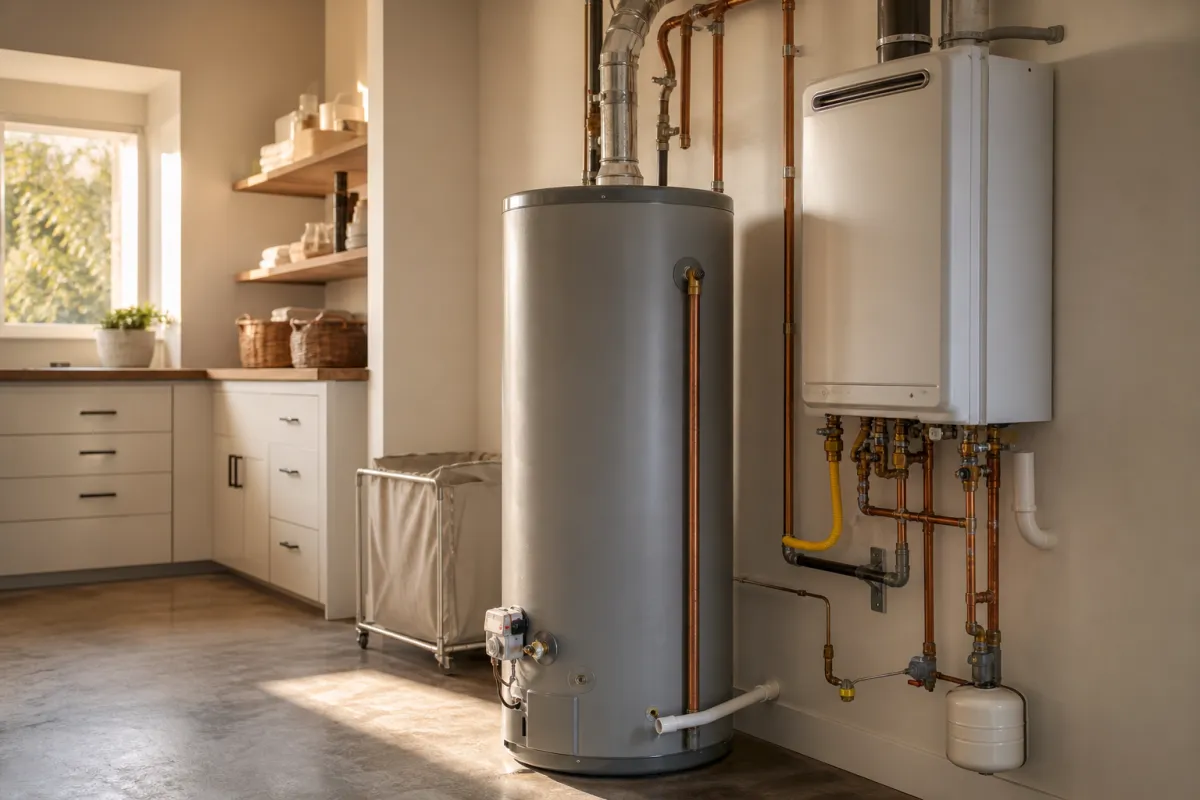
Sizing a water heater is less about memorizing a chart than matching stored capacity and recovery rate to the way a household actually uses hot water. Count simultaneous showers, laundry, dishwasher cycles, tub fills, and the number of people at home during the busiest hour. Then account for fuel type, available space, venting, and the mineral load the equipment will handle year after year.
For a typical Bexar County home, a 40-gallon tank may serve two people with staggered routines, while a family of four often lands at 50 gallons or needs a higher first-hour rating. Large soaking tubs and back-to-back showers can push demand higher even when the household is small. In the Medical Center area, older shutoffs and mixed plumbing materials also deserve inspection before a heavier tank or new fuel connection is approved.
Use the steps below to narrow the range, then have the installer confirm combustion air, electrical capacity, venting, drain-pan routing, and permit requirements. A useful quote should explain why the proposed first-hour rating fits your peak demand—not simply recommend the largest unit that fits.
Why Water Heater Sizes Matter
Choosing the right water heater size is essential for several reasons. First, it impacts your home’s energy efficiency. An oversized unit will cycle on and off more frequently, wasting energy and increasing your utility bills. Conversely, a unit that is too small will struggle to meet your household's hot water demands, leading to cold showers and frustration.
Additionally, the right size can prolong the lifespan of your water heater. An appropriately sized unit will operate more efficiently, reducing wear and tear. This not only saves you money in energy costs but also minimizes the risk of costly repairs or replacements down the line.
What to Check First
Before diving into the specifics of water heater sizes, there are a few key factors to assess:
1. Household Size: The number of people in your household directly influences your hot water needs. Generally, a family of four will require a larger unit than a single person.
2. Peak Usage Times: Consider when your household uses the most hot water. If everyone showers in the morning, you’ll need a unit that can replenish hot water quickly during that time.
3. Appliances and Fixtures: Take inventory of your water-using appliances, such as dishwashers and washing machines. Each of these devices has its own hot water requirements, which should be factored into your calculations.
4. Fuel Type: Water heaters can be powered by electricity, natural gas, propane, or solar energy. The type of fuel can affect both the size and efficiency of the unit you choose.
5. Space Availability: Ensure you have adequate space for the water heater. Measure the area where you plan to install it, accounting for ventilation and accessibility for maintenance.
Match Capacity to Peak-Hour Demand
Once you’ve assessed your household’s needs, it’s time to consider the various water heater sizes available. Here’s a breakdown of the most common types:
1. Tank Water Heaters:
- Size Range: Typically available in sizes from 20 to 80 gallons.
- Best For: Larger households or those with high hot water demands.
- Tradeoffs: While they provide a large supply of hot water, they can be inefficient due to standby heat loss.
2. Tankless Water Heaters:
- Size Range: Measured in gallons per minute (GPM), typically ranging from 2 to 10 GPM.
- Best For: Smaller homes or those with lower hot water needs.
- Tradeoffs: They heat water on demand, which can save energy, but may struggle to supply multiple outlets simultaneously.
3. Heat Pump Water Heaters:
- Size Range: Usually between 40 to 80 gallons.
- Best For: Energy-conscious homeowners in moderate climates.
- Tradeoffs: They are more energy-efficient but require more space and can be more expensive upfront.
4. Solar Water Heaters:
- Size Range: Varies widely based on system design.
- Best For: Environmentally-conscious homeowners looking to reduce utility costs.
- Tradeoffs: Initial costs can be high, and performance varies by location and season.
Steps to Choose the Right Size
1. Calculate Your Household’s Daily Hot Water Needs: Use a water heater sizing calculator or consult a chart to estimate your daily hot water usage based on your household size and habits.
2. Consider Recovery Rate: For tank water heaters, look at the recovery rate, which indicates how quickly the unit can heat water after it has been used. This is crucial for high-demand times.
3. Evaluate Energy Efficiency Ratings: Check the Energy Factor (EF) rating for tank water heaters or the Uniform Energy Factor (UEF) for tankless systems. Higher numbers indicate better efficiency.
4. Consult the Water Heater Sizes Chart: Use a reliable water heater sizes chart as a reference to match your estimated needs with the appropriate unit size.
Common Mistakes to Avoid
1. Underestimating Demand: Many homeowners assume they need less hot water than they actually do. Always err on the side of caution and choose a slightly larger unit if you have any doubts.
2. Ignoring Recovery Time: Failing to consider how quickly a tank can recover can lead to frustration during peak usage times, especially in larger households.
3. Overlooking Ventilation Needs: Some units, particularly gas models, require proper ventilation to operate safely. Be sure to account for this in your planning.
4. Neglecting Maintenance: Water heaters require regular maintenance to operate efficiently. Failing to flush your tank or check the anode rod can lead to sediment buildup and reduced efficiency.
5. Forget to Factor in Space: Ensure that your chosen unit fits the space you have available. Measure carefully and consider any additional clearance needed for maintenance.
When to Escalate Beyond DIY
While many homeowners may feel comfortable selecting and installing a water heater, certain situations warrant professional assistance:
1. Complex Installations: If your installation involves complicated plumbing or electrical work, it’s best to hire a licensed plumber or electrician.
2. Gas Water Heaters: If you’re installing a gas water heater, professional installation is crucial for ensuring safety and compliance with local codes.
3. Old Infrastructure: If you have an older home with outdated plumbing or electrical systems, a professional can assess whether upgrades are necessary before installing a new unit.
4. Permitting and Codes: Some installations require permits or must adhere to specific building codes. A professional will be familiar with these regulations and can ensure compliance.
5. Repairs and Maintenance: If you’re experiencing issues with your current water heater, a professional can diagnose problems and recommend repairs or replacements.
FAQ
1. How do I know what size water heater I need?
Start by calculating your household’s daily hot water needs and consult a water heater sizes chart for guidance.
2. What is the difference between tank and tankless water heaters?
Tank water heaters store hot water, while tankless models heat water on demand. Tankless units are generally more energy-efficient but may have limitations in simultaneous use.
3. How often should I maintain my water heater?
It’s recommended to flush your tank annually and check the anode rod every 3-5 years for optimal performance.
4. Can I install a water heater myself?
While some homeowners may feel confident doing so, it’s advisable to call a professional for gas models or complex installations.
5. What are the signs that I need a new water heater?
Look for signs such as inconsistent water temperature, rust-colored water, or unusual noises coming from the unit.
Quick Reference Table: Water Heater Sizes
| Water Heater Type | Size Range | Best For | Tradeoffs |
|---|---|---|---|
| Tank Water Heaters | 20-80 gallons | Large households | Standby heat loss |
| Tankless Water Heaters | 2-10 GPM | Smaller homes | Limited simultaneous use |
| Heat Pump Water Heaters | 40-80 gallons | Energy-conscious homes | Requires more space |
| Solar Water Heaters | Varies | Eco-friendly homeowners | High initial costs |
Why This Is Different in San Antonio
Water supplied from the Edwards Aquifer is commonly measured near 357 mg/L, or 21 grains per gallon—extremely hard by ordinary household standards. That matters to this job because stored capacity, first-hour rating, and sediment displacement. SAWS water-quality reporting is the right source for current systemwide data, while visible scale at a specific home shows what its equipment is actually experiencing.
In Medical Center area, age, construction type, and access can change the repair plan as much as the failed part. Bexar County homeowners should photograph corrosion or leaks, note error codes and service dates, and ask whether the quote addresses the cause as well as the symptom. After a severe freeze or prolonged outage, inspect exposed lines before assuming the appliance itself is the only problem.
What San Antonio Homeowners Pay (2026)
| Service or equipment | Typical 2026 range |
|---|---|
| 40–50 gallon gas or electric tank replacement | $1,200–$2,800 installed |
| Tankless conversion or replacement | $2,500–$5,500 installed |
| Expansion tank, pan, or shutoff upgrades | $150–$650 when added to a project |
| Whole-home water softener | $1,500–$4,000 installed |
These are planning ranges, not bids. Access, permits, fuel or electrical upgrades, equipment efficiency, warranty terms, and after-hours timing can move the final price. Ask for a written scope that separates equipment, labor, code-related upgrades, and optional water treatment.
When to Call a San Antonio Plumber
Call a licensed plumber when there is an active leak, a valve will not close, water is near electrical equipment, gas odor is present, a breaker trips repeatedly, or the repair requires opening a fuel, vent, or pressurized-water connection. Shut off the relevant utility only if you can do so safely. For gas odor, leave the building and contact the gas utility or emergency services from outside.
For non-emergency work, give the plumber the model number, symptoms, error codes, maintenance history, and photos. Ask whether the proposed repair accounts for hard-water scale and whether the contractor is licensed and insured for the work. A clear diagnosis is more valuable than replacing parts until the symptom disappears.
San Antonio FAQ
Is the local water hard enough to change maintenance intervals?
Yes. At roughly 357 mg/L / 21 gpg, mineral accumulation can be much faster than national maintenance examples imply. Follow the appliance manual first, then shorten inspection or descaling intervals when scale returns before the next planned service.
Does every home need a water softener?
No single answer fits every household. Treatment is worth evaluating when scale returns quickly, valves bind, appliance heat exchangers need frequent service, or water-heater life has been short. Test the water, compare maintenance costs, and make sure any treatment system is sized and maintained correctly.
What can a homeowner safely do before the appointment?
Document the symptom, clear access, stop using leaking or overheating equipment, and locate the correct shutoff. Do not bypass safeties, open gas components, work live electrical circuits, or force a corroded valve. Those boundaries protect both the home and the technician who follows.