> San Antonio Local Insight: San Antonio's extremely hard water from the Edwards Aquifer (357 mg/L, 21 gpg) shortens water heater lifespan by 2–4 years. Sediment buildup forces heating elements to overwork, causes popping/rumbling noises, and leads to premature tank failure. local plumbers recommend flushing every 6 months — double the national frequency.
A useful maintenance checklist prevents surprises without turning homeowners into appliance technicians. The priorities are leak detection, safe temperature, clear combustion and venting, controlled sediment removal, and records that show when performance changes. In a King William retrofit, access and mixed generations of plumbing can matter as much as heater age.
Budget $200–$450 for a professional tank inspection and flush when the drain arrangement, gas controls, or electrical components are outside your comfort zone. Maintenance should reduce risk; it should never require bypassing a safety control.
Monthly: Look, Listen, and Keep Access Clear
Inspect the floor, pan, cold and hot connections, expansion tank, relief discharge pipe, and drain valve. Look for white crust, green staining, rust trails, moisture, or a pan drain that does not lead to a safe location. Listen during a full heating cycle for new popping, sizzling, or short cycling.
Keep paint, gasoline, boxes, and laundry away from the unit. Gas heaters need unobstructed combustion air and a sound vent. Do not store chemicals nearby. Confirm the temperature at a faucet with a thermometer; around 120°F is appropriate for many homes, balancing comfort, energy use, and scald risk.
Every Six Months: Plan for Hard-Water Sediment
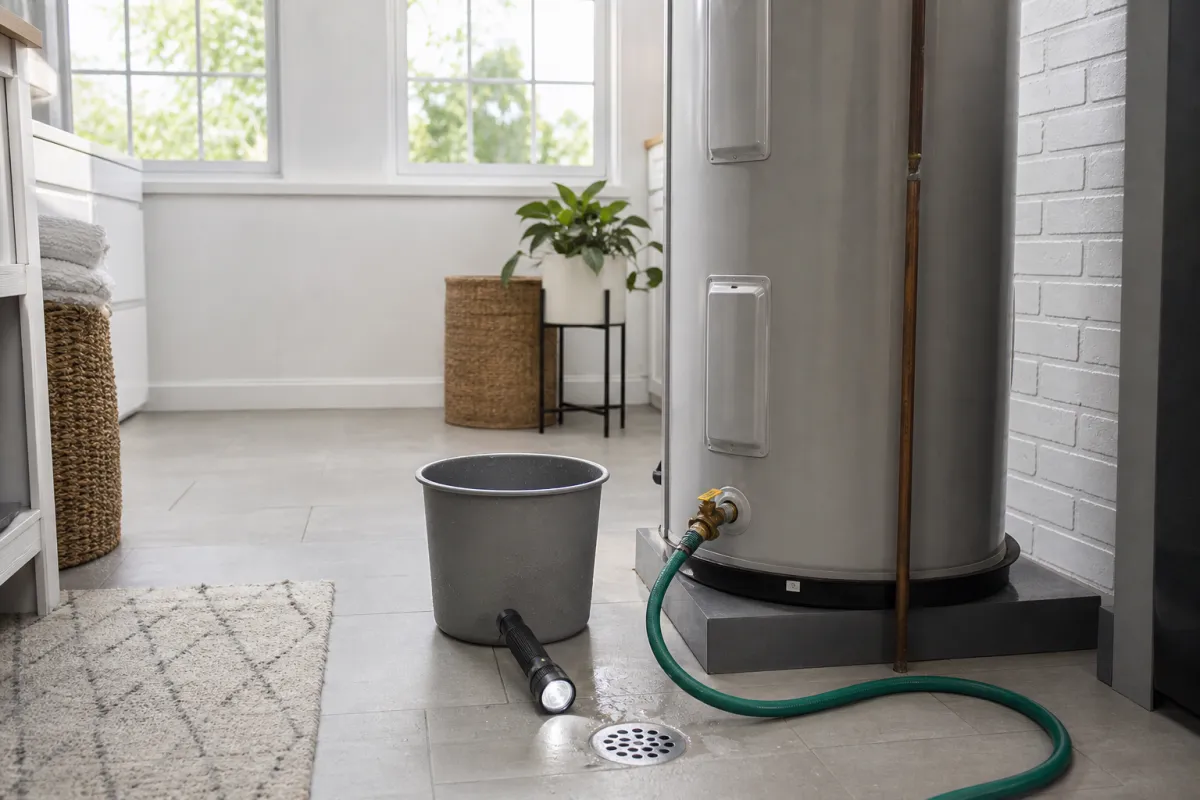
Review the manufacturer’s flushing instructions. If the heater has been maintained, the valves are sound, and a safe drain route exists, a controlled flush can remove loose sediment. Shut off energy, let the water cool, use a rated hose, prevent backflow, and refill completely before restoring power. Never dry-fire an electric element.
If the heater is old, has never been flushed, or has a corroded drain valve, ask a plumber to assess it first. Disturbing compacted sediment may expose a weak seam or prevent the valve from closing. Check the anode according to the manufacturer’s interval; replacing it can extend tank life, but seized fittings and low ceiling clearance make this a professional task in many homes.
Annually: Review the Whole Installation
Have gas combustion, venting, safety controls, electrical connections, grounding, thermal expansion, and water pressure evaluated as appropriate. Test smoke and carbon-monoxide alarms on their own schedule. Inspect pipe insulation without covering controls, vents, or relief piping.
For tankless equipment, clean the inlet filter and arrange descaling at an interval based on hardness, use, and manufacturer guidance. Confirm isolation valves are operable. A softener needs its own maintenance—salt, brine tank, bypass valve, and hardness testing—because an exhausted unit gives false confidence.
Seasonal and Record-Keeping Tasks
Before freezing weather, inspect exposed supply lines and equipment in garages or exterior closets. Winter Storm Uri is a reminder that a short freeze can reveal weak insulation and marginal fittings. Before summer guests or high-use periods, check recovery time and available hot-water volume.
Keep a simple log of temperature, flush date, sediment observed, repairs, model and serial number, warranty, and photos. A trend—more noise, slower recovery, recurring moisture—is more informative than one isolated reading. Review heater age annually so replacement can be planned instead of handled during a leak.
Why This Is Different in San Antonio
Water supplied from the Edwards Aquifer is very hard—about 357 mg/L, or 21 grains per gallon. That mineral load does not create every plumbing problem, but it changes how quickly scale forms and how often equipment needs attention. SAWS customers can confirm service alerts and water-quality information with the utility; private-well owners should use a current lab test rather than assume their chemistry matches the municipal supply.
Across San Antonio and Bexar County, homes also combine hot attics and garages, long cooling seasons, and occasional hard freezes. Winter Storm Uri showed why exposed lines, exterior-wall plumbing, and equipment in unconditioned spaces deserve a seasonal check. Mineral deposits can hide a weak seal or restricted passage until a pressure or temperature change makes it obvious. The practical response is earlier inspection—not aggressive chemicals or unnecessary replacement.
What San Antonio Homeowners Pay (2026)
| Maintenance or service | Typical local range | Suggested use |
|---|---|---|
| Professional tank inspection/flush | $200–$450 | About every 6–12 months based on sediment |
| Tankless descaling | $250–$600 | Based on use, hardness, and manufacturer guidance |
| Anode rod service | $300–$700 | When inspection shows depletion |
| Element/thermostat repair | $250–$650 | After electrical diagnosis |
| Standard tank replacement | $1,200–$2,800 | Internal leak or uneconomical repair |
Access, heater size, fuel type, permits, venting, expansion control, and after-hours timing affect quotes. Ask for findings and measurements, not just a generic maintenance package.
When to Call a San Antonio Plumber
Call for any tank-shell leak, relief-valve discharge, gas odor, carbon-monoxide alarm, soot, scorched wiring, repeat breaker trip, unstable temperature, or hot water that is rusty without a known utility event. Stop using the unit when water can reach electricity or the burner.
Professional maintenance is also the right choice when valves are seized, there is no safe drain route, the unit has gone years without service, or it sits above finished space. A licensed technician should leave the heater operating, leak-free, and with every safety device intact.
San Antonio FAQ
Is a six-month flush always required?
Six months is a useful inspection rhythm in very hard water, but the actual flush interval should reflect sediment, heater design, service history, and warranty instructions.
Can a softener replace heater maintenance?
No. It can reduce scale when properly sized and maintained, but the heater still needs leak, safety, and performance checks.
Should I test the relief valve myself?
Follow the manufacturer’s directions only. On an old or corroded unit, have a plumber inspect it because the valve may not reseal.
When should I replace instead of repair?
Internal leakage, advanced corrosion, repeated failures, poor efficiency, and repair cost relative to age are strong reasons to plan replacement.