Quick answer: No garbage disposal makes food waste disappear or makes heavy disposal use harmless to a septic system. The U.S. EPA advises households with septic systems to limit garbage-disposal use because ground food adds unnecessary solids to the tank. If you still want a disposal, choose a serviceable unit that fits under the sink, use it only for plate residue, and keep scraping food into compost or trash.
A “septic-safe” badge can be useful, but it should not outrank the condition of your septic system, household habits, or access to local service. Around San Antonio and the Hill Country, the first buying question is not “Which motor is strongest?” It is “Can this tank and drain field accept more solids without creating an avoidable service problem?”
The decision in one table
| Your situation | Best next step | Why |
|---|---|---|
| Tank inspection or pump-out is overdue | Service the septic system before buying | A new grinder cannot correct an overloaded tank or weak drain field. |
| Slow drains, sewage odor, gurgling, or wet ground near the field | Stop disposal use and call a septic professional | These are system-warning signs, not product-selection problems. |
| Healthy system; household scrapes plates first | A basic 1/2–3/4 HP continuous-feed unit can be enough | Moderate power handles small residue without paying for unused capacity. |
| Frequent cooking for a large household | Reduce food sent to the sink before upsizing | A larger motor can grind more, but the septic tank still receives the solids. |
| Children or users who may reach into the sink | Consider batch feed | The stopper must be in place before the unit operates. |
| Tight cabinet, deep sink, or existing filter system | Measure before choosing a model | Motor width, discharge height, and plumbing alignment can determine fit. |
Start with the septic system, not the appliance
The EPA’s septic-system FAQ is direct: limit garbage-disposal use because food waste adds unnecessary solid material to the tank. Grinding scraps into smaller particles may help them travel through the drain, but it does not remove their mass. Those particles still become scum or sludge that the tank must separate and hold.
EPA’s septic-care guidance says an average household system should be inspected at least every three years and tanks are typically pumped every three to five years; systems with pumps, floats, or mechanical components generally need more frequent inspection. Disposal use is one factor that can shorten the pump interval, so ask the service professional to set the schedule from actual solids accumulation rather than a generic calendar.
Before shopping, find the latest inspection or pump-out record and answer four questions:
1. When was the tank last inspected or pumped? If no one knows, resolve that first.
2. Are all drains moving normally? A slow kitchen drain alone may be a trap or branch-line problem; slow fixtures throughout the house can signal a larger issue.
3. Does the yard show odor, damp soil, or unusually green growth near the drain field? Stop adding load and arrange an inspection.
4. How much food does the household currently send down the sink? Changing that habit protects the system more than moving from one disposal brand to another.
This is especially important on properties outside the central SAWS sewer network, where onsite systems are common and maintenance records may not transfer clearly between owners.
What to compare on an exact model
Brand reputation is only a starting point. Open the official specification sheet and installation manual for the exact model and compare these items.
Motor size and household use
A 1/2 HP unit is usually adequate for light residue after plates are scraped. A 3/4 HP model may recover from small jams more easily and often includes better sound insulation. One-horsepower models are larger and costlier; they do not make bones, grease, coffee grounds, fibrous peels, or large quantities of scraps appropriate for septic disposal.
Continuous feed versus batch feed
Continuous-feed units run from a wall or air switch while waste is added. They are common and convenient but depend on careful use. Batch-feed units operate only with a special stopper in place. That extra step can be worthwhile where accidental activation is a concern, but model choice is narrower and the body may be taller.
Physical fit
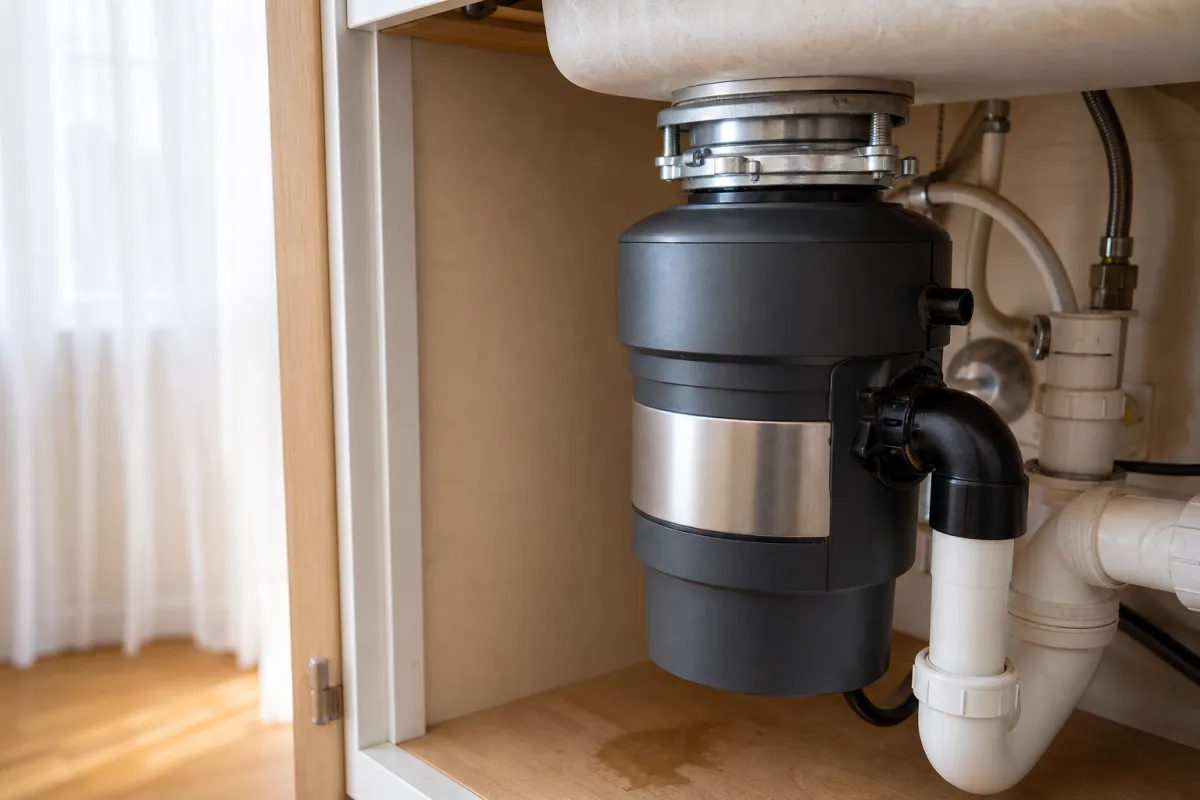
Measure cabinet depth, sink-bowl depth, disposal diameter, discharge height, and the position of the trap. Confirm whether a dishwasher drain hose connects to the unit. A deep replacement sink can lower the outlet enough that an existing drain no longer slopes correctly.
Serviceability
Favor a unit with overload protection, a manual jam-release method, replaceable splash guard where available, and parts that local plumbers can obtain. Save the model number and receipt. A disposal is easier to own when the reset, wrench point, mounting system, and replacement parts are documented.
“Septic assist” additives
Some models dispense an additive marketed for septic use. Treat that as an optional feature, not permission to increase food loading. The EPA warns against relying on septic additives as a substitute for proper operation and maintenance. Follow the septic professional’s advice and the product label rather than assuming an additive is required.
San Antonio water: relevant, but not the main septic issue
SAWS explains that calcium carbonate from the Edwards and Trinity aquifers makes local water hard; its water-quality FAQ and current water-quality report are the right references for a specific service area.
Hard water can leave scale at the sink flange, faucet, shutoff valves, dishwasher connection, and drain surfaces. That can complicate removal of an old unit or expose a brittle fitting during replacement. It does not make a high-horsepower grinder more septic-safe. The septic decision remains about solids loading, tank condition, and household behavior.
A low-risk use routine
- Scrape plates and pans into compost or trash first.
- Keep grease, oil, coffee grounds, eggshells, fibrous husks, peels, and expanding starches out of the drain.
- Run cold water before starting, feed only a small amount at a time, and continue water briefly after the chamber clears.
- Never use hands to retrieve an object. Disconnect power and follow the manufacturer’s jam-clearing instructions.
- Do not use the disposal to mask an existing slow drain.
- Keep septic inspection and pump-out records with the appliance manual.
The best outcome is a disposal that handles occasional residue—not one that quietly changes the kitchen into a solids-loading point.
DIY installation or hire a professional?
A like-for-like swap can be approachable when the existing mount, drain alignment, switched power, and dishwasher connection are all sound. Shut off the breaker, verify that the unit cannot start, and follow the exact manufacturer instructions.
Hire a licensed plumber or electrician when:
- there is no grounded power source or switch;
- the old unit is hardwired and the replacement instructions differ;
- the sink flange, trap, or discharge alignment must change;
- a shutoff valve is seized or leaking;
- the cabinet shows water damage;
- several drains are slow or the septic system shows warning signs.
For local work, ask the installer to separate the quote into the unit, removal, plumbing changes, electrical work, and any septic diagnosis. That makes a low headline price easier to compare with a complete scope.
A five-minute buying checklist
- Septic inspection/pump-out status is known.
- No current backup, odor, gurgling, or drain-field warning sign.
- Household agrees to scrape plates first.
- Cabinet and discharge dimensions are measured.
- Exact model manual confirms power and dishwasher requirements.
- Reset and jam-release access will remain reachable.
- Local service and replacement parts are available.
- Installation scope includes any plumbing or electrical correction.
FAQ
Is an InSinkErator Septic Assist the only acceptable option?
No. A feature marketed for septic systems does not replace careful solids management. Compare the exact unit’s fit, serviceability, warranty, and installation instructions, then limit use regardless of brand.
Is 1 HP better for septic systems?
Not automatically. More horsepower can grind difficult scraps, but grinding more waste can send more solids to the tank. Choose power for reliable light use, not as a reason to change disposal habits.
Can enzymes prevent pumping?
Do not treat additives as a replacement for inspection or pump-out. Follow the septic professional’s maintenance plan and EPA guidance.
What should I read next?
Compare the cost of a complete disposal installation, review drain-cleaner tradeoffs, and use the local project request when the scope includes plumbing, electrical work, or septic warning signs.