> San Antonio Local Insight: Drain and sink clogs in San Antonio are different from other cities. Edwards Aquifer hard water (357 mg/L) deposits white calcium scale inside pipes that traps hair, grease, and soap more aggressively. Standard drain cleaners often fail because they dissolve organic matter but not mineral buildup. local homes need descaling-specific methods.
A drain snake is useful when the blockage is close enough to reach and soft enough to break apart, but choosing the wrong cable can scratch a fixture, knot inside a bend, or push grease deeper into the line. Start by identifying the affected fixtures. One slow sink usually points to a branch drain; several fixtures backing up together can indicate a main-line problem that a homeowner tool should not tackle.
In a New Braunfels or Boerne-area home with heavy mineral staining, white scale can narrow an older trap and give hair or soap a rough surface to cling to. A $25–$60 hand auger is often a sensible first purchase for a recurring bathroom-sink clog. It is not a substitute for a sewer camera when toilets and tubs are backing up at the same time.
Match the Snake to the Drain
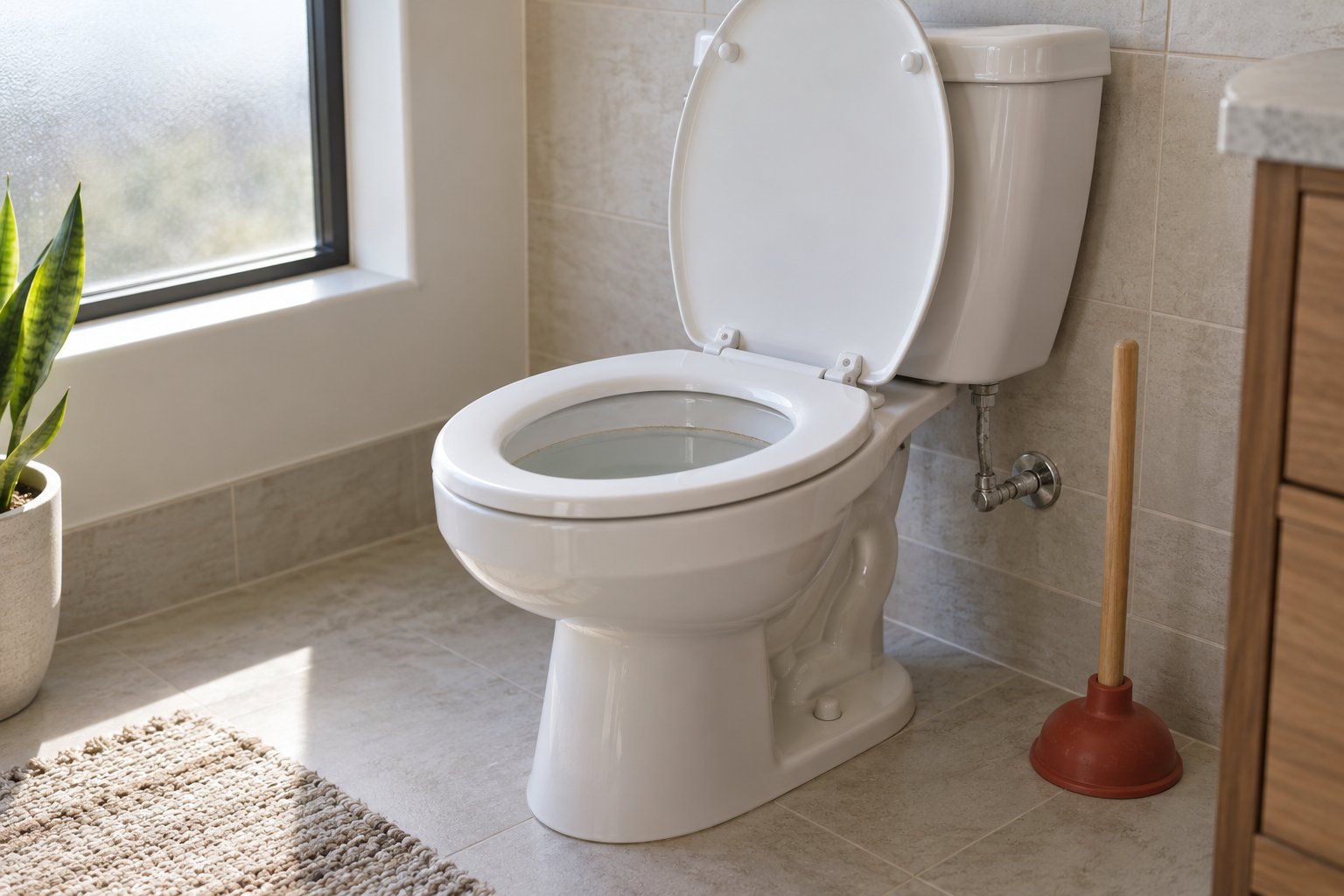
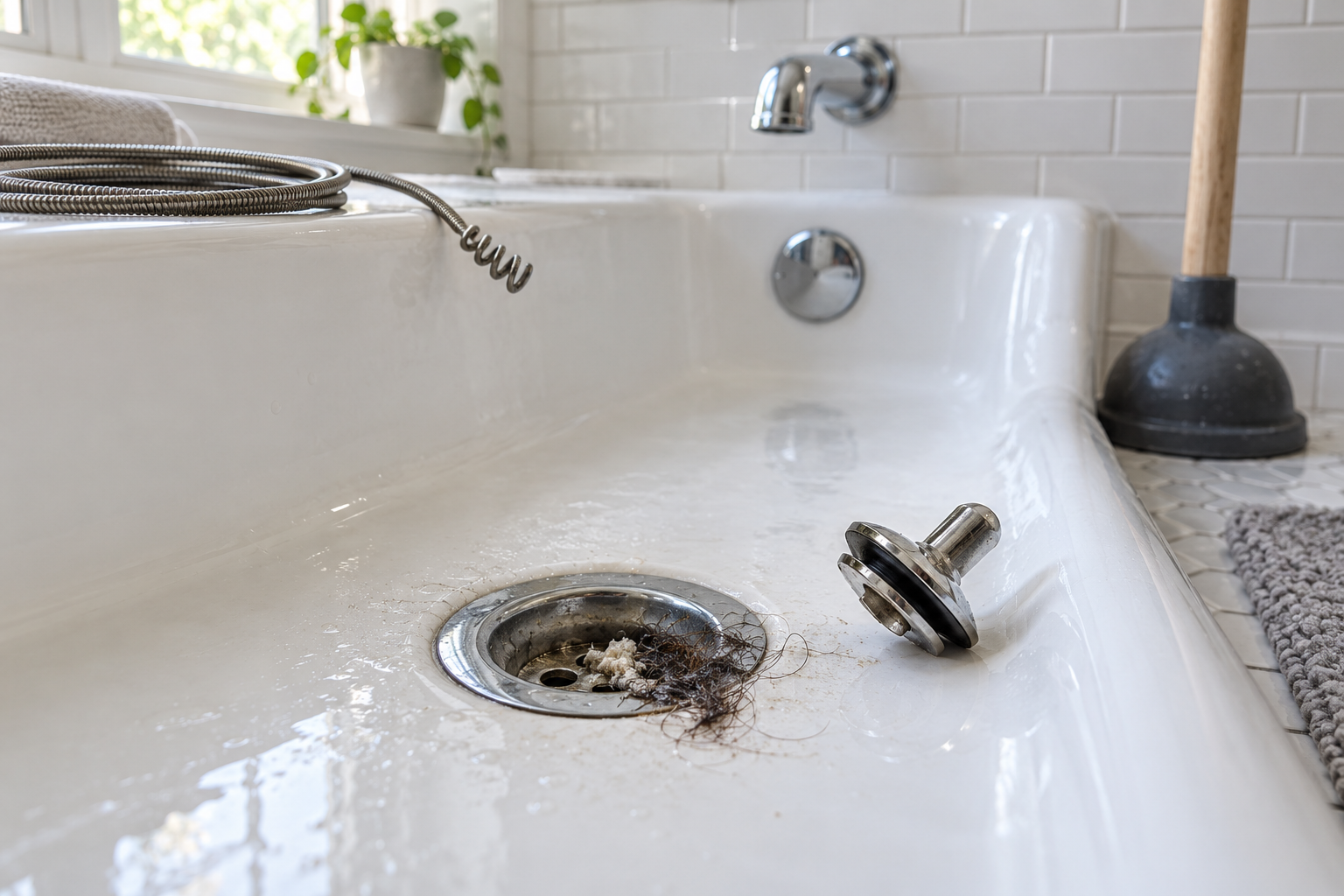
For a bathroom sink or tub, choose a 1/4-inch cable in a compact drum, usually 15–25 feet long. A flat tape tool can retrieve hair near a stopper but cannot negotiate a deep branch line. For a kitchen branch, a 3/8-inch cable offers more torque, although grease should first be removed from the trap where accessible. Toilet clogs require a closet auger with a protective sleeve; never feed a bare steel cable through the bowl because it can scar porcelain.
A powered 1/2-inch or larger machine belongs in trained hands. The cable can bind, whip, or catch a glove, and selecting the wrong cutter can damage cast iron, clay, or plastic. Homes in King William may have old cast-iron sections joined to newer PVC, so resistance does not tell you what material is ahead.
A Safe DIY Sequence
1. Stop using the fixture and remove standing water with a cup or wet vacuum.
2. Put on eye protection and chemical-resistant gloves. If drain cleaner has already been used, do not open the trap or snake the line; splashing caustic liquid can cause burns.
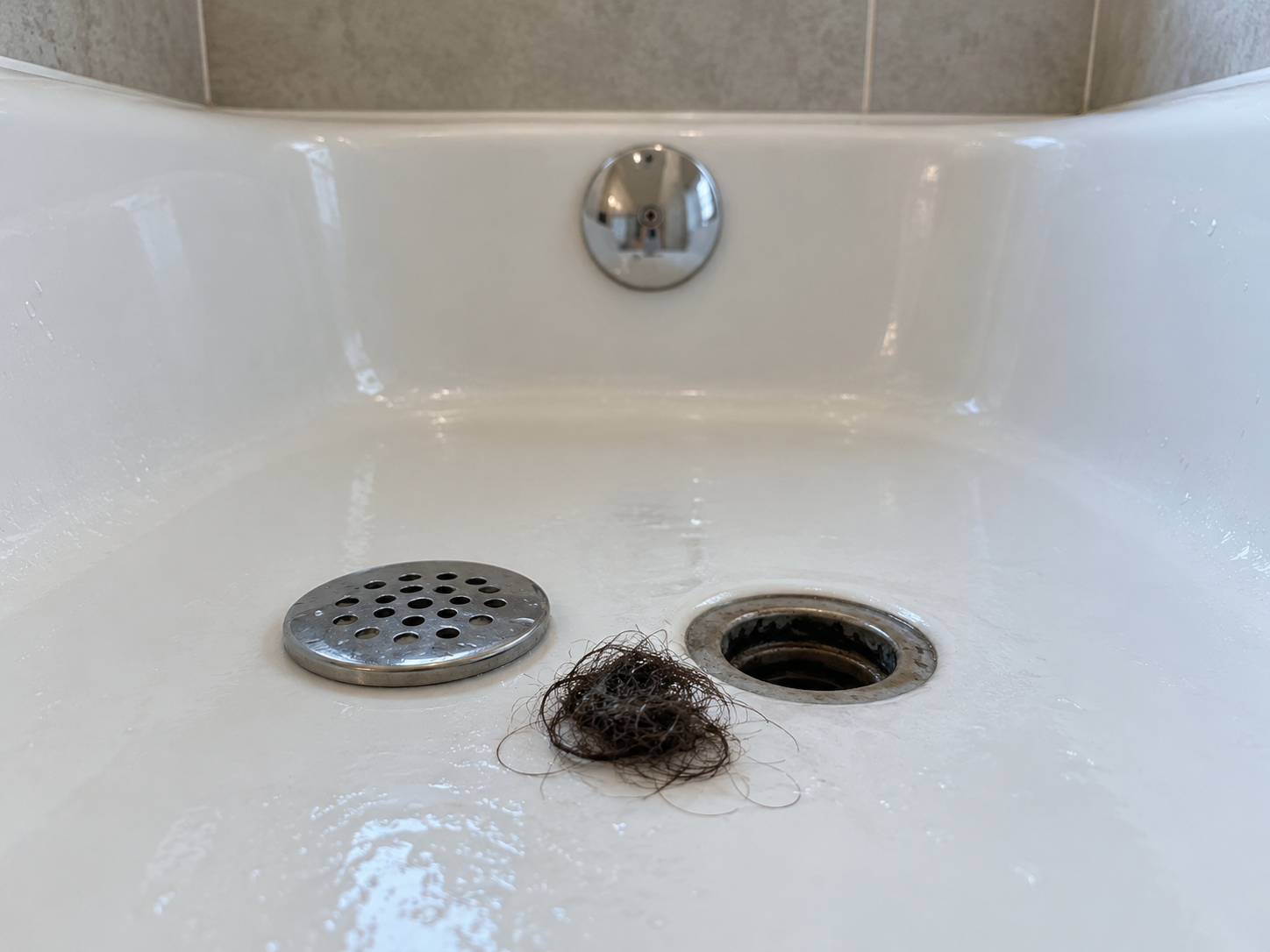
3. Remove and clean the stopper or strainer. Many bathroom clogs are within inches of the opening.
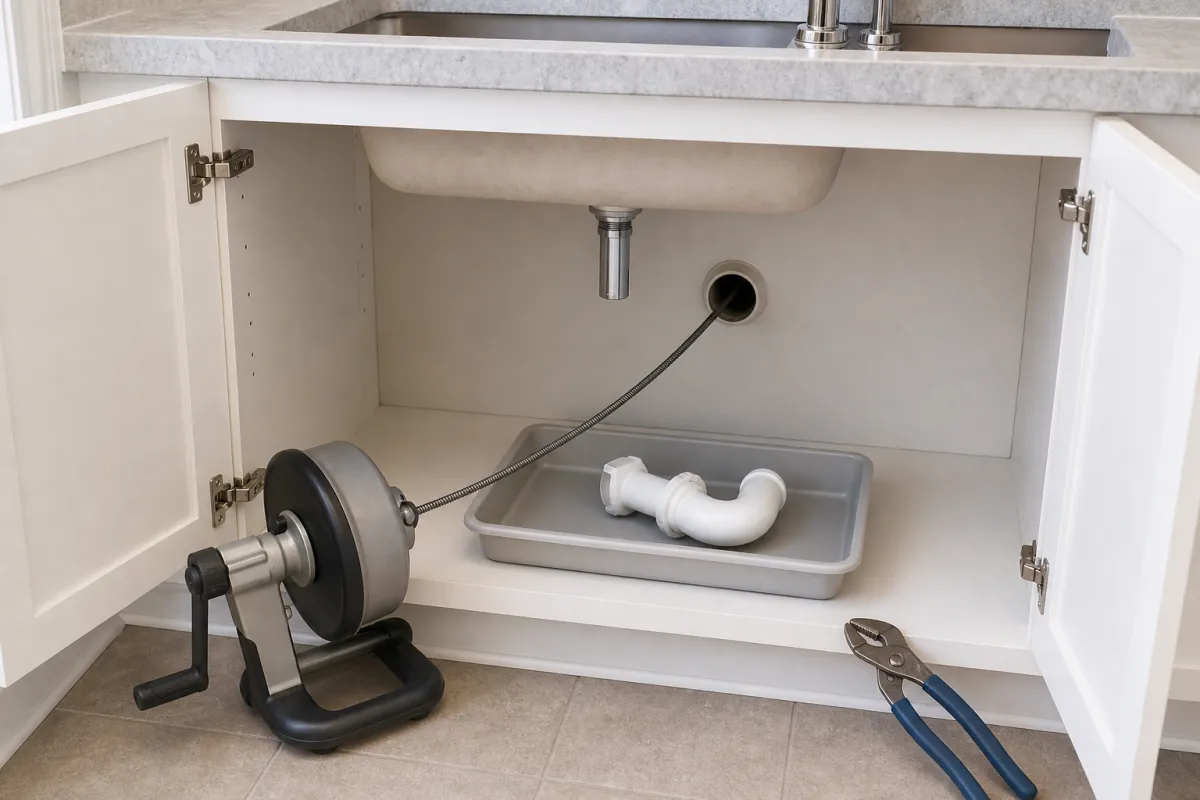
4. If the trap is accessible, place a bucket below it, remove it gently, and clean it. Do not force a corroded slip nut.
5. Feed the cable slowly. When it meets resistance, rotate while advancing a few inches—never hammer it forward.
6. Retract and wipe the cable in short sections. Repeat, then flush with warm water and observe every joint for leaks.
Do not use boiling water on PVC, and do not combine bleach, acids, enzyme products, or commercial opener. A snake removes material mechanically; it does not make incompatible chemicals safe.
Reading What Comes Back
Hair and soap point to a local fixture problem. Dense grease from a kitchen line calls for better scraping and disposal habits, not repeated chemical treatments. Orange or black flakes may be corrosion. Hard white chips suggest mineral scale; repeated scale clogs justify a plumber’s inspection and a discussion of treatment options rather than blindly buying a larger auger.
If the cable repeatedly stops at the same distance, mark that distance. It may correspond to a fitting, a damaged section, roots, or a heavy deposit. This observation is more useful to a technician than saying the drain is simply “slow.” After clearing, time how long a full basin takes to empty and check the cabinet again several hours later.
Why This Is Different in San Antonio
Water supplied from the Edwards Aquifer is very hard—about 357 mg/L, or 21 grains per gallon. That mineral load does not create every plumbing problem, but it changes how quickly scale forms and how often equipment needs attention. SAWS customers can confirm service alerts and water-quality information with the utility; private-well owners should use a current lab test rather than assume their chemistry matches the municipal supply.
Across San Antonio and Bexar County, homes also combine hot attics and garages, long cooling seasons, and occasional hard freezes. Winter Storm Uri showed why exposed lines, exterior-wall plumbing, and equipment in unconditioned spaces deserve a seasonal check. Mineral deposits can hide a weak seal or restricted passage until a pressure or temperature change makes it obvious. The practical response is earlier inspection—not aggressive chemicals or unnecessary replacement.
What San Antonio Homeowners Pay (2026)
| Service or tool | Typical local range | When it makes sense |
|---|---|---|
| Plastic hair tool | $5–$15 | Visible hair close to a tub or sink opening |
| 15–25 ft hand drum auger | $25–$60 | One small branch drain with no chemical exposure |
| Professional branch-drain cleaning | $150–$350 | Recurring or deeper sink/tub blockage |
| Sewer camera inspection | $200–$400 | Repeated stoppage or several affected fixtures |
| Main-line cleaning | $300–$700+ | Confirmed building-drain obstruction |
Access, line length, after-hours service, and the condition of old piping change the final quote. Ask whether camera work, cleanup, and a return visit are included.
When to Call a San Antonio Plumber
Stop DIY work for sewage at a floor drain, multiple fixtures backing up, a cable trapped in the line, suspected roots, or any leak behind a wall. Call promptly if a clog returns within days; repeated snaking can damage a weak pipe without addressing the cause. Renters should notify the property manager before opening a trap.
A licensed plumber should also evaluate galvanized or badly corroded piping, recurring scale obstruction, and any line that may cross a foundation. Keep children and pets away from contaminated water, avoid running additional fixtures, and photograph the affected area before cleanup.
San Antonio FAQ
Can I snake a drain after using chemical opener?
No. Tell the plumber exactly what was poured into the line and when. The cable can splash trapped corrosive liquid.
Does hard water alone clog a drain?
Usually it acts as an accomplice. Scale roughens and narrows the pipe, allowing hair, soap, and grease to collect faster.
Should I buy a powered drain machine?
Most homeowners are better served by a hand auger for a simple branch clog. Powered machines can injure the operator and damage piping.
How can I reduce repeat clogs?
Use strainers, keep grease and wipes out of drains, clean stoppers monthly, and address persistent mineral scale with a diagnosis rather than repeated chemicals.